Yes - Grade II listed buildings can be & regularly are extended. What changes is how the extension has to be designed, justified & built.
The principle is subordination
Extensions to listed buildings are usually expected to be secondary to the original: modest in scale, sited where they do least harm, & reversible where possible.
Two design philosophies are commonly accepted - a clearly contemporary addition that reads as new, or a carefully matched addition that continues the existing building. Both can succeed; what rarely succeeds is an imitation that gets the details slightly wrong.
How this looked at Thurloxton Manor
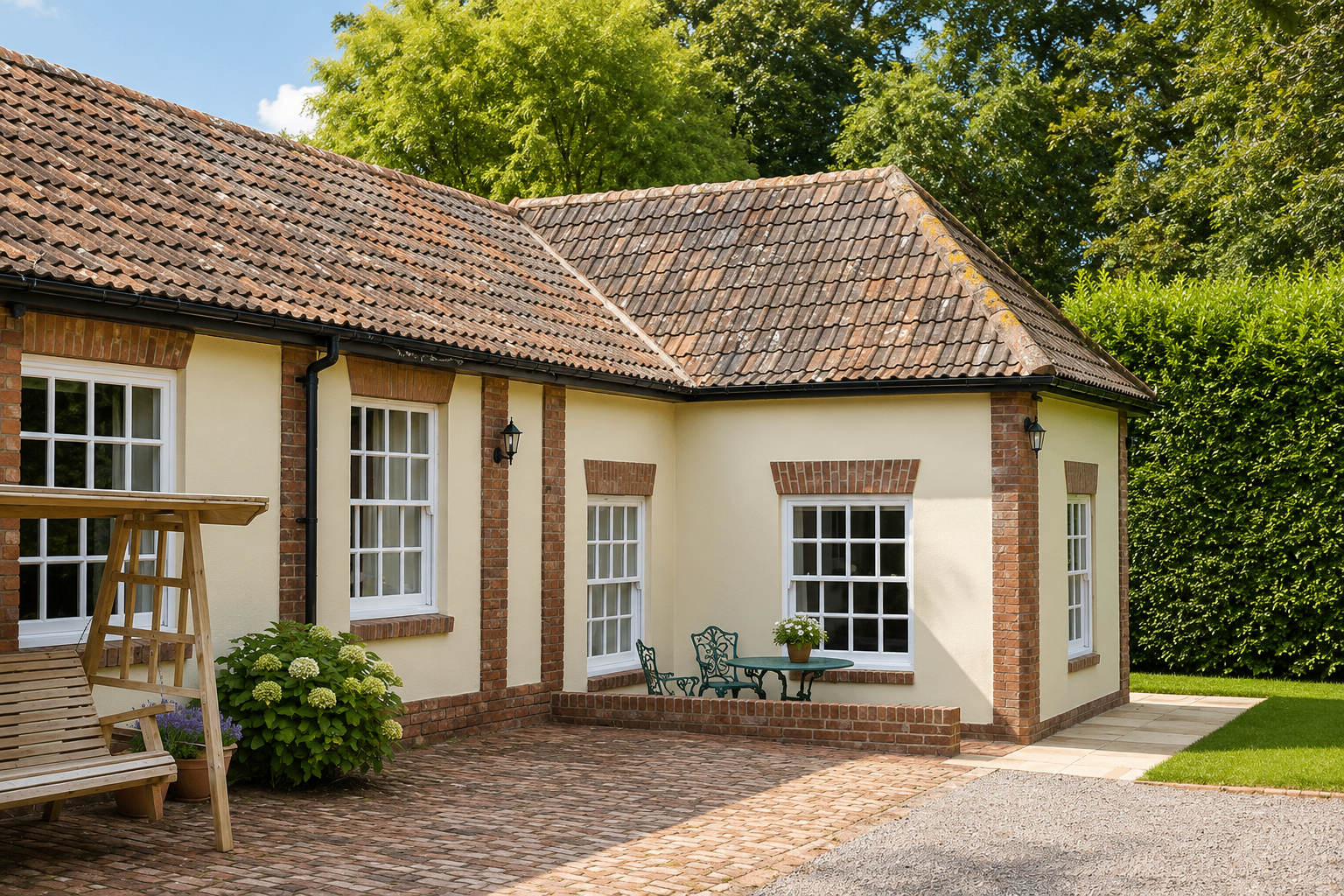
At Thurloxton, the brief was an additional storey & extension to a Grade II listed stable block adjacent to the main house. The intention was that you should have no idea where the old ends & the new begins.
Achieving that meant underpinning the entire end of the existing property to carry the new load, painstakingly sourcing materials to match, & making the sash windows in our own workshop to suit the building & its listed status. The finished work added a living area, a study with built-in shelving & a master bedroom with ensuite above.
What tends to determine success
Siting matters more than size. So does the junction between old & new, where a poorly resolved detail will always draw the eye.
The other decisive factor is buildability: a beautiful drawing that cannot be built without damaging historic fabric will be revised on site, so it is far better to resolve it before work begins.
Benjamin Henry Ltd provides heritage & listed building services across Somerset & the South West, from traditional masonry & structural repair to bespoke joinery made in our own workshop.
Related Reading
This article is general guidance drawn from our experience as a building contractor. It is not planning, legal or heritage-consultancy advice - your local authority conservation team or an appointed heritage professional should confirm what applies to your building.