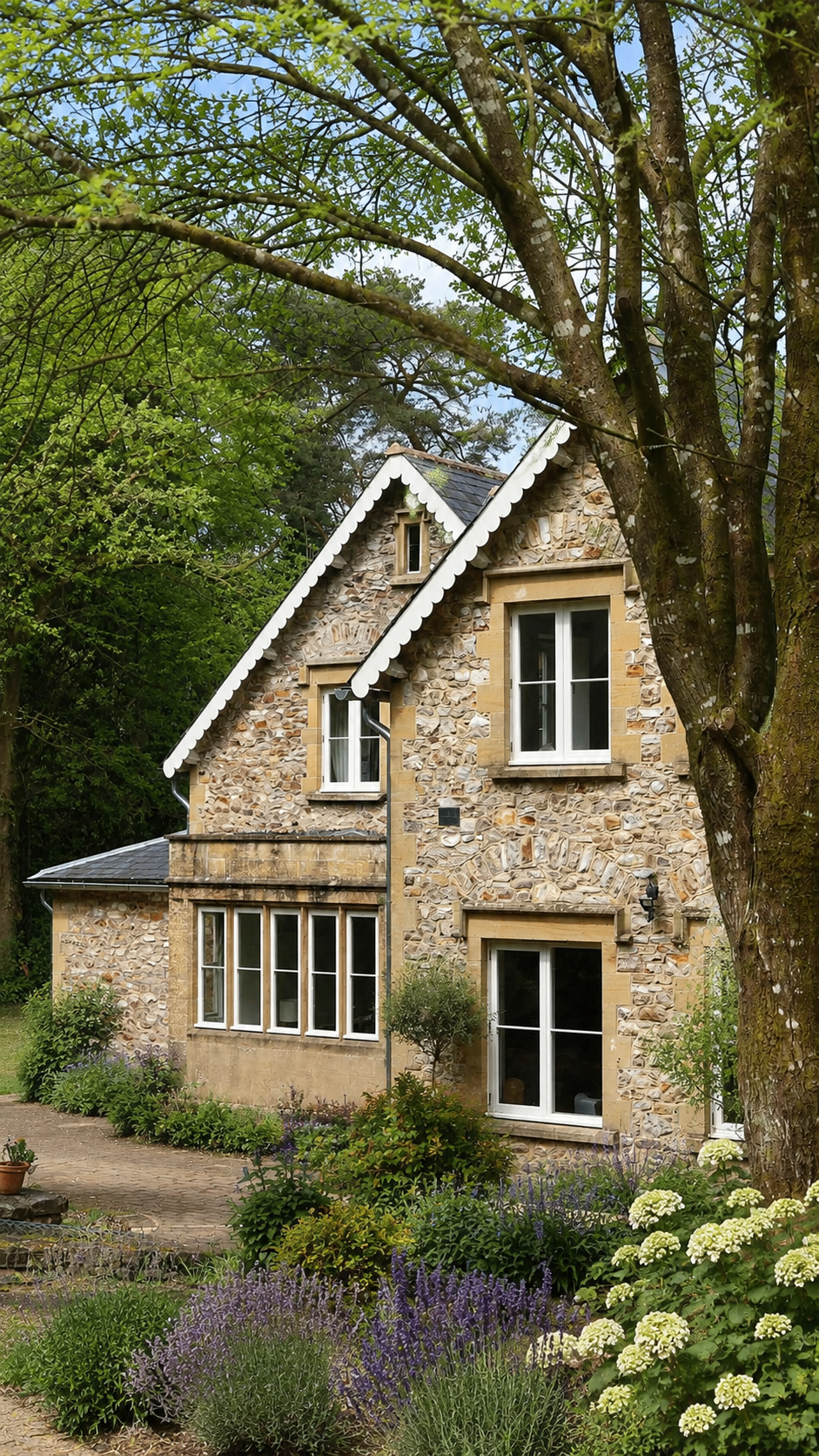
If there is one technical decision that separates good heritage work from damaging work, it is the mortar.
How traditional walls work
Solid stone & brick walls built before the twentieth century were constructed to absorb moisture & release it again. Lime mortar is softer & more permeable than the masonry around it, so it lets that moisture escape through the joints.
It is also comparatively flexible, accommodating the small movements an old building makes without cracking the stone.
What cement does to them
Cement mortar is harder & far less permeable. Moisture that can no longer leave through the joints leaves through the stone or brick instead, taking the face of the material with it as it freezes & dries.
Because cement is rigid, movement that lime would have absorbed is transferred into the masonry units. Much of the eroded stonework seen on period Somerset properties is the legacy of cement repointing carried out decades ago.
Repointing done properly
Good repointing means raking out old material carefully without widening the joint, matching the mix & aggregate to the existing, & protecting new work while it cures.
It is slow, weather-dependent work. Rushed in the wrong season, even the correct mortar will fail.
In practice
On our Widcombe project, masonry work included repointing stonework, damp proofing, chimney & roof repairs, stabilising existing walls & reinstating paving so that it blended with the existing - the ordinary, unglamorous work that determines whether a historic building survives the next century.
Benjamin Henry Ltd provides heritage & listed building services across Somerset & the South West, from traditional masonry & structural repair to bespoke joinery made in our own workshop.
Related Reading