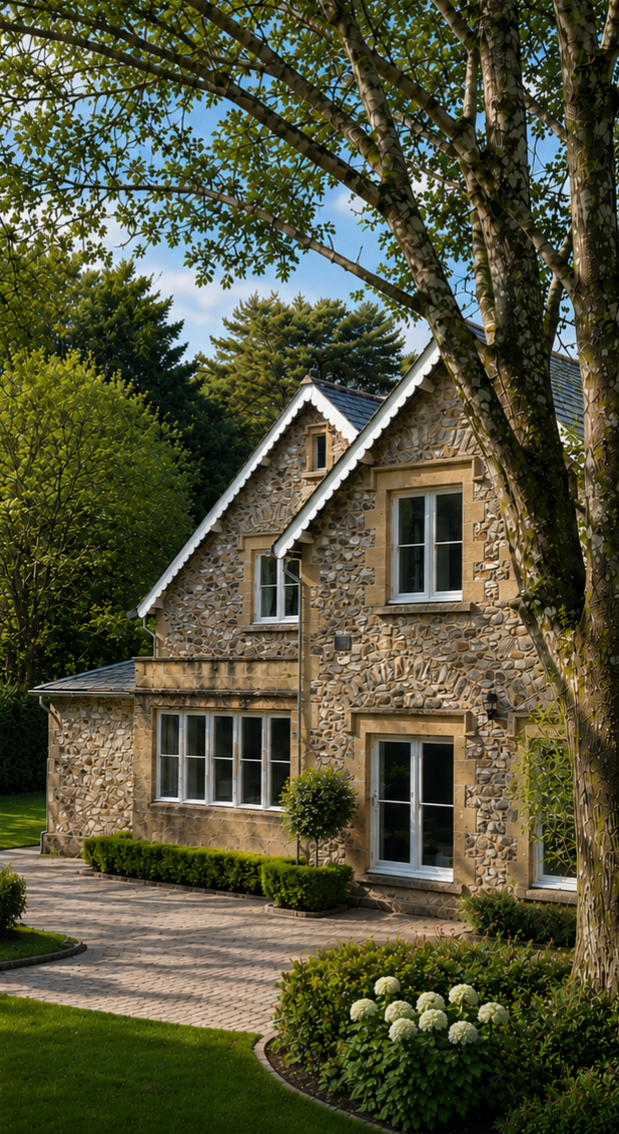
Listed building consent is the single biggest practical difference between renovating a listed home & renovating any other house.
What consent actually covers
Consent is required for works that affect the special architectural or historic interest of a listed building. That protection applies to the interior as much as the exterior, & can extend to attached & curtilage structures such as stables, outbuildings & walls.
Repairs that genuinely replace like with like are treated differently from alterations - but the judgement of what counts as like-for-like belongs to the local authority, not to the homeowner or the builder.
Consent is not the same as planning permission
The two run in parallel. A project may need planning permission, listed building consent, both, or - for pure repair - neither. Building regulations approval is a third, separate matter.
In Somerset these applications are handled by your local planning authority, whose conservation team will usually comment on heritage impact.
What strengthens an application
Applications are generally assessed on how well the proposal is understood & justified. A heritage statement, measured drawings, clear material specifications & an explanation of why the work is being done all help.
Where structural intervention is proposed, an engineer's rationale showing that the least intrusive option has been chosen carries real weight.
Where a contractor fits in
We do not submit applications or give consent advice - that sits with your architect, heritage consultant or local authority. What we do is build to the consented design & specification, & flag early when something uncovered on site may differ from what was approved.
Keeping conservation officers informed during the build, rather than only at the start, tends to make the whole process smoother.
Benjamin Henry Ltd provides heritage & listed building services across Somerset & the South West, from traditional masonry & structural repair to bespoke joinery made in our own workshop.
Related Reading
This article is general guidance drawn from our experience as a building contractor. It is not planning, legal or heritage-consultancy advice - your local authority conservation team or an appointed heritage professional should confirm what applies to your building.