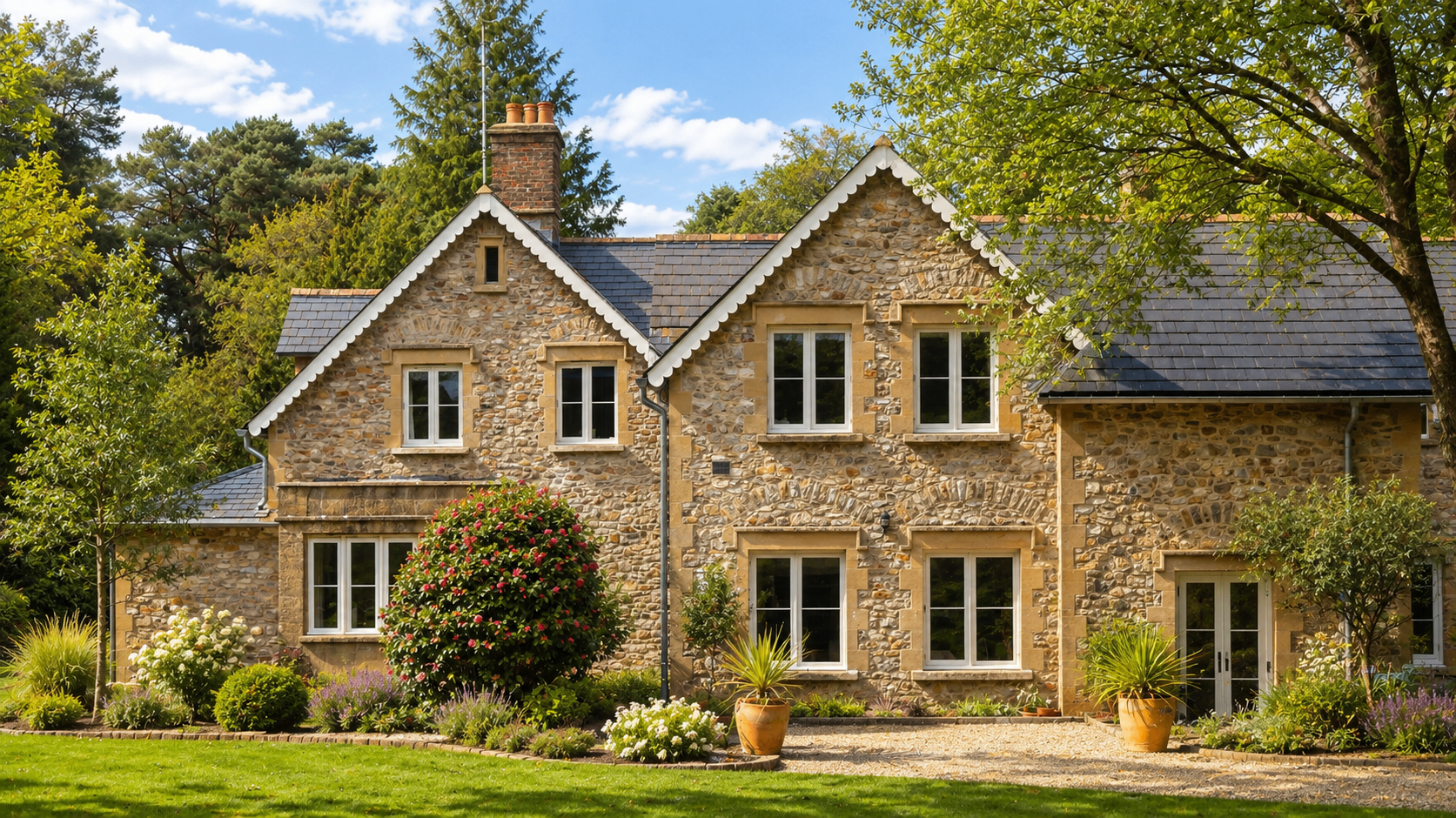
Renovating a listed building is one of the most rewarding things a homeowner can take on - & one of the least forgiving if it is approached like an ordinary refurbishment.
Understand the building before you change it
Listing protects the whole building, inside & out, together with structures within its curtilage. That means a modest internal alteration can require the same consideration as a visible external change.
Before design work begins, it is worth establishing how the building is constructed: solid walls or cavity, lime or cement mortar, timber frame or masonry, & where previous repairs have used materials that do not suit it. Most of the problems we encounter on period properties in Somerset come from well-meant twentieth-century work rather than from age itself.
Consents come first
Listed building consent is a separate process from planning permission & is administered by your local authority. Work carried out without it cannot be regularised in the way unauthorised ordinary building work sometimes can.
Most homeowners appoint an architect experienced with historic buildings, & on more complex projects a heritage consultant & structural engineer as well. Our role begins alongside that team: we build to the design & consents agreed, & we are used to working within their constraints.
Expect the building to reveal itself
Opening up a historic building almost always uncovers something - a wall that is not carrying what everyone assumed, timber that has been repaired before, a floor level that steps where the drawings say it does not.
A sensible programme allows for this. At Thurloxton Manor, achieving an additional storey on a Grade II listed stable block meant underpinning the entire end of the existing property before any of the new structure could go up.
Materials & craftsmanship decide the result
Lime mortars, matched stone, hand-made joinery & traditional detailing are what allow new work to disappear into old. Sourcing them properly takes time & should be built into the programme rather than squeezed at the end.
Because our joinery is made in our own workshop, windows, doors & staircases can be measured & made to suit each individual opening rather than ordered to the nearest standard size.
Choosing who carries out the work
Ask to see completed heritage projects, ask who will actually be on site, & ask how the contractor has worked with conservation officers previously. Accreditations such as Federation of Master Builders membership & TrustMark registration are a useful baseline.
Above all, look for a contractor comfortable saying that something should be left alone.
Benjamin Henry Ltd provides heritage & listed building services across Somerset & the South West, from traditional masonry & structural repair to bespoke joinery made in our own workshop.
Related Reading
This article is general guidance drawn from our experience as a building contractor. It is not planning, legal or heritage-consultancy advice - your local authority conservation team or an appointed heritage professional should confirm what applies to your building.